
The not so super, Super.
The Wrought Iron Project: Chapter 3
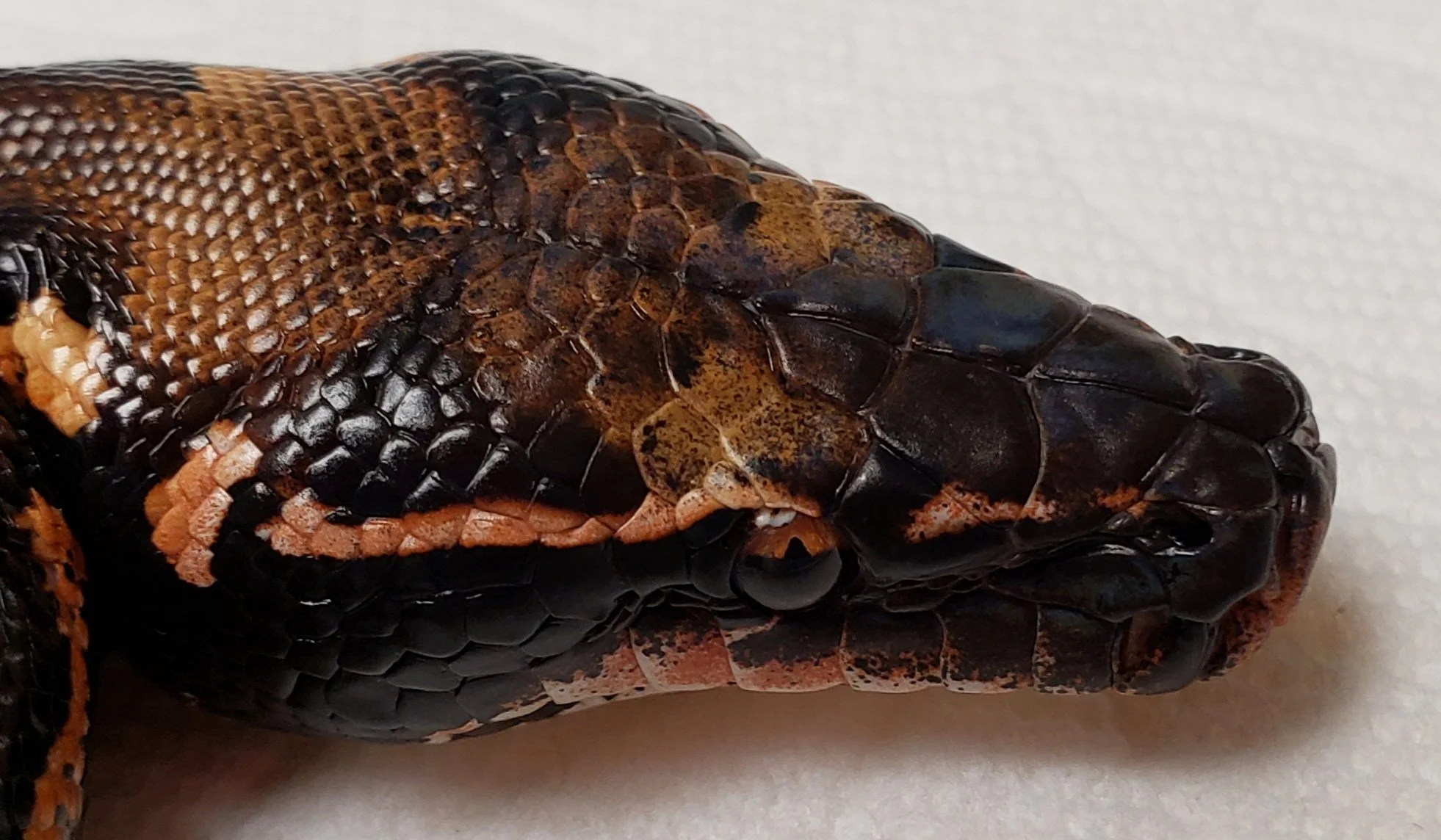
"Perfection"... For the last four years, I have been obsessed with achieving this tantalizing concept for the Wrought-Iron (WI) project. Many of you have been following this journey for quite some time, and you may be familiar with the abnormal eye scale issue (AES) that essentially halted the release of this unbelievable morph back in 2019. (See images courtesy of VPI below)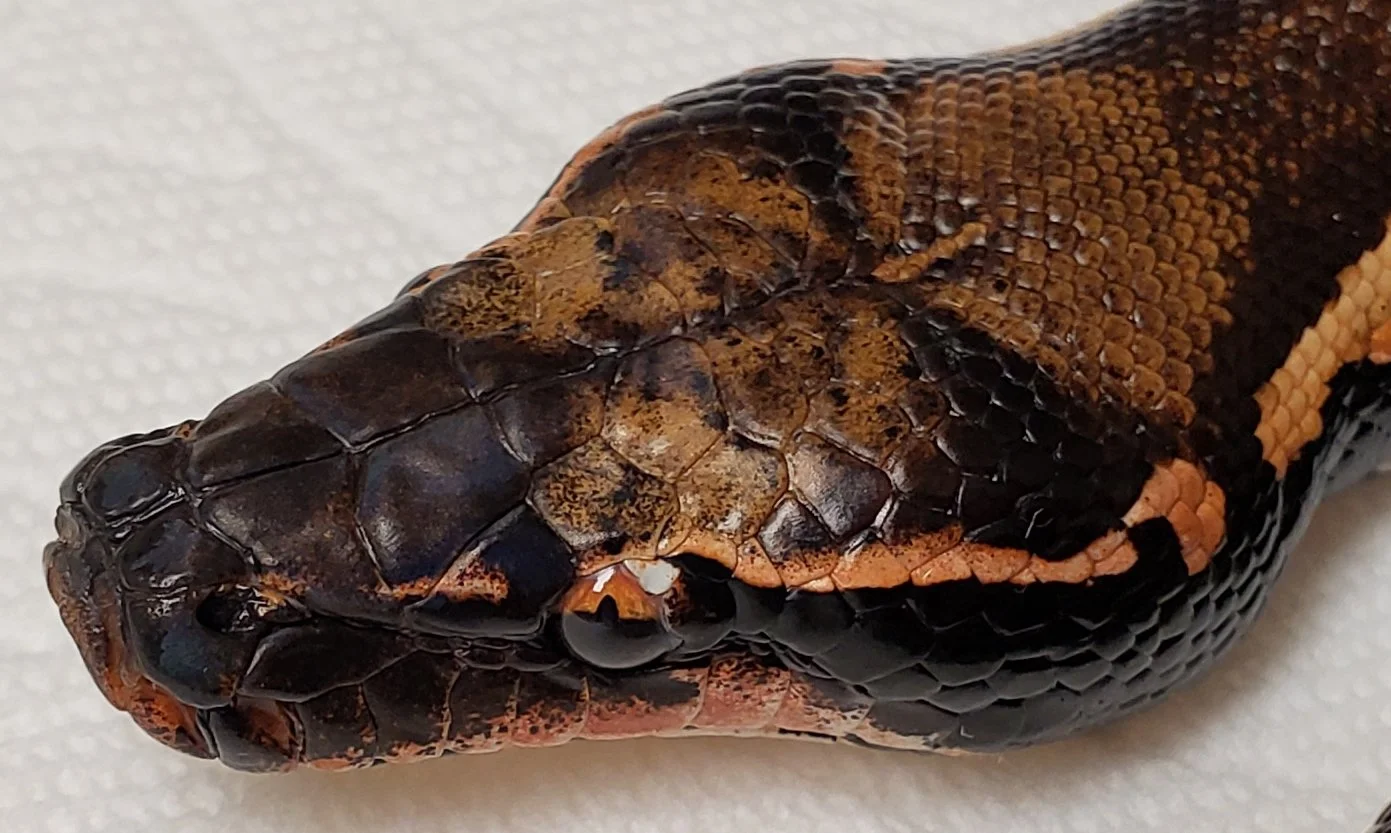
Fast forward to 2022, in an attempt to understand what was happening with the WI morph, I envisioned a multi-year breeding plan with one goal in mind: To produce "perfect-eyed" WIs.
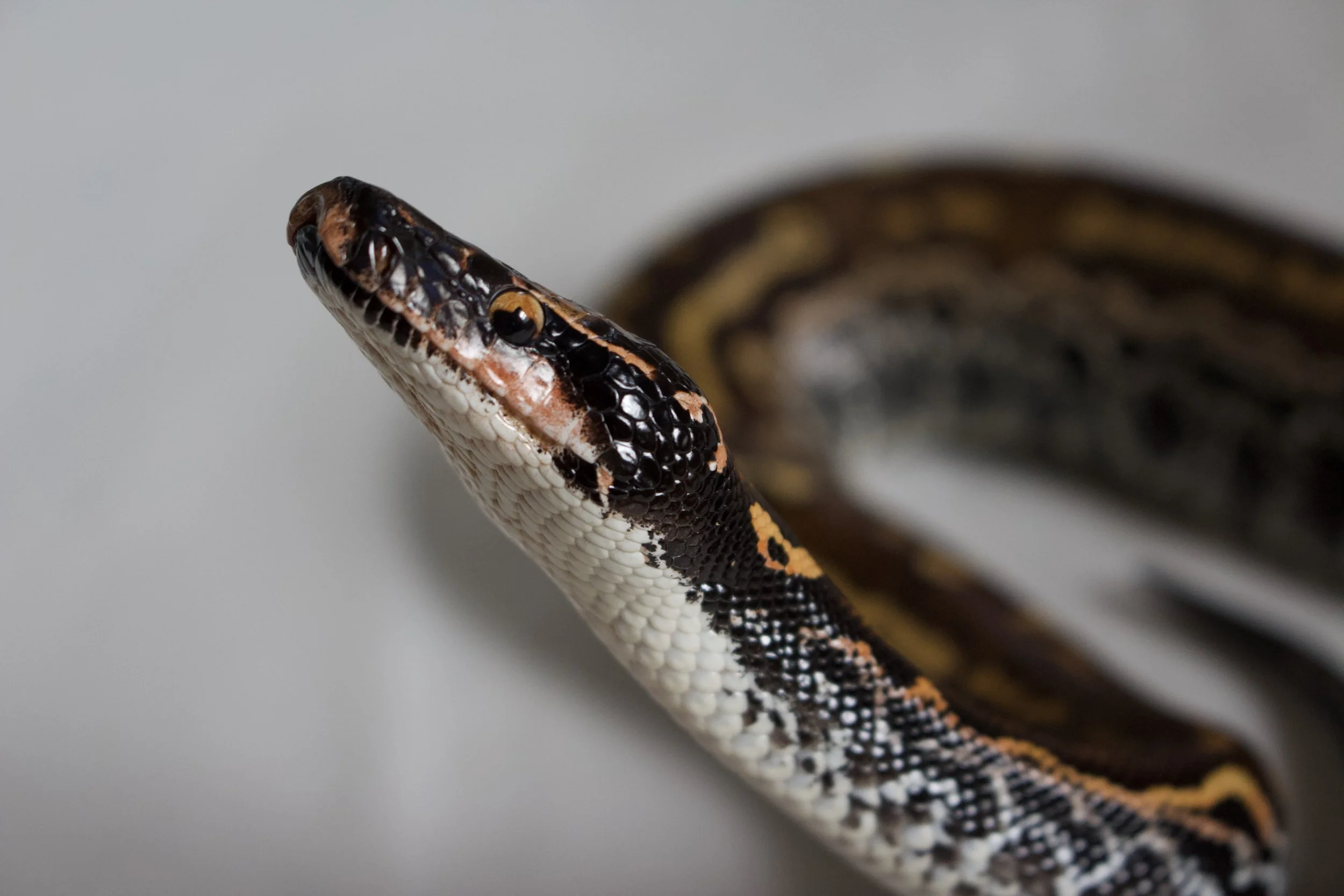
In year one, 2023, I was able to produce normal Wrought-Irons and a T+ albino WI with perfect eyes after adjusting the incubation parameters. At this point, the strongest proposal
for the AES was a negative interaction between the T+ albino mutation and the
Wrought-Iron gene. Having "perfect-eyed" WIs from this clutch discarded the hypothesis of a
weakening link induced by albinism and redirected my attention to an environmental factor/issue
during incubation. (See images below).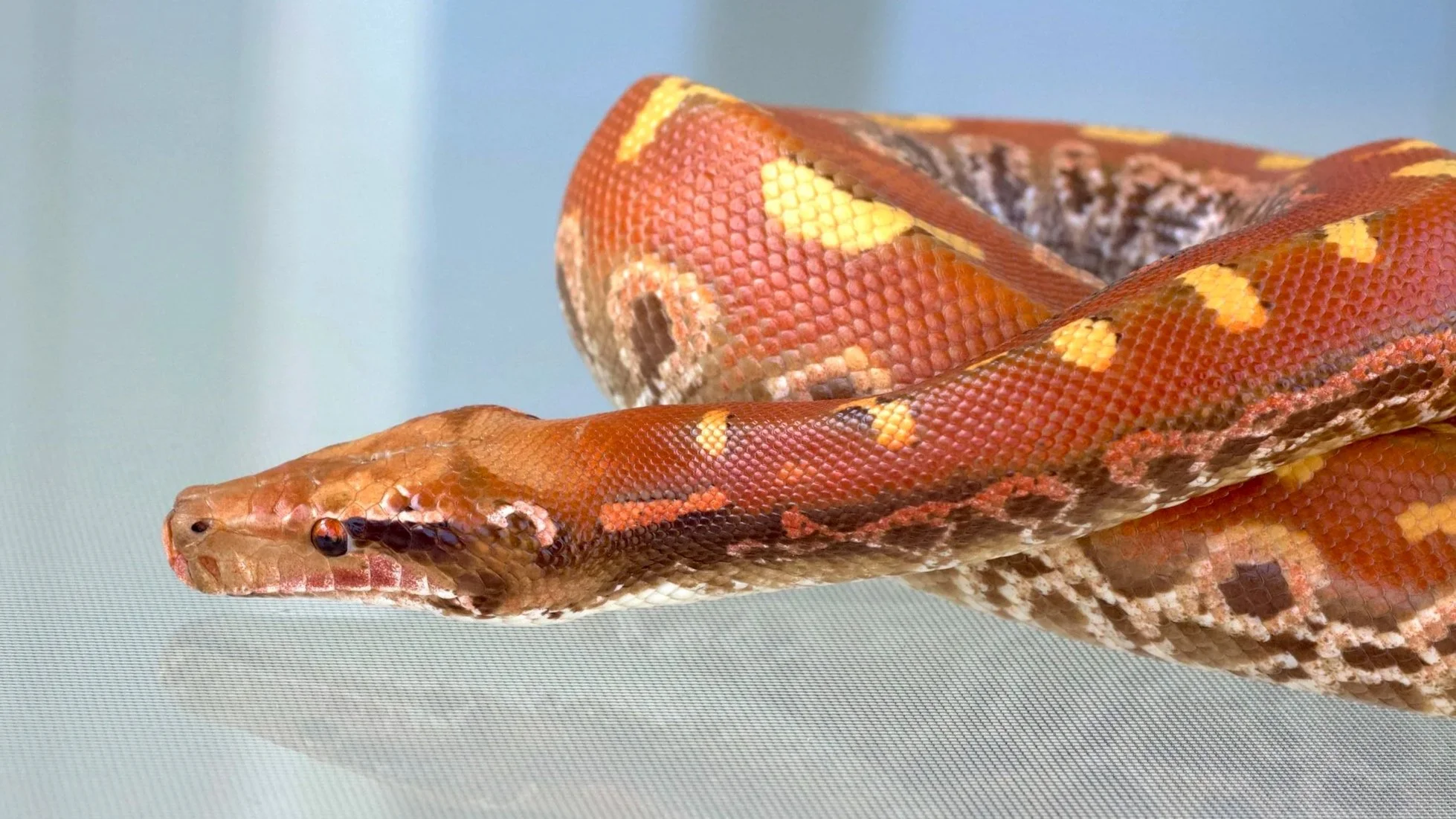
After this initial success, I was eager and ready to move on to the second step of the plan —the
WI combo phase. The following season (2024), the goal was to explore the interactions between
the WI gene and other mutations, including the T+ albino gene, to increase the sample size. I decided to use two of the most popular morphs in the blood python realm: the Goldeneye and
Matrix, while replicating the exact incubation parameters. This time, the results were far better
than anticipated. I was able to produce a good number of WIs combos, and once again, all babies having perfect eyes gave me more confidence in the project.
Among these amazing snakes, two incredible "perfect-eyed" T+ albino WI combos hatched— a T+
albino goldeneye-WI, and a T+ albino matrix-WI.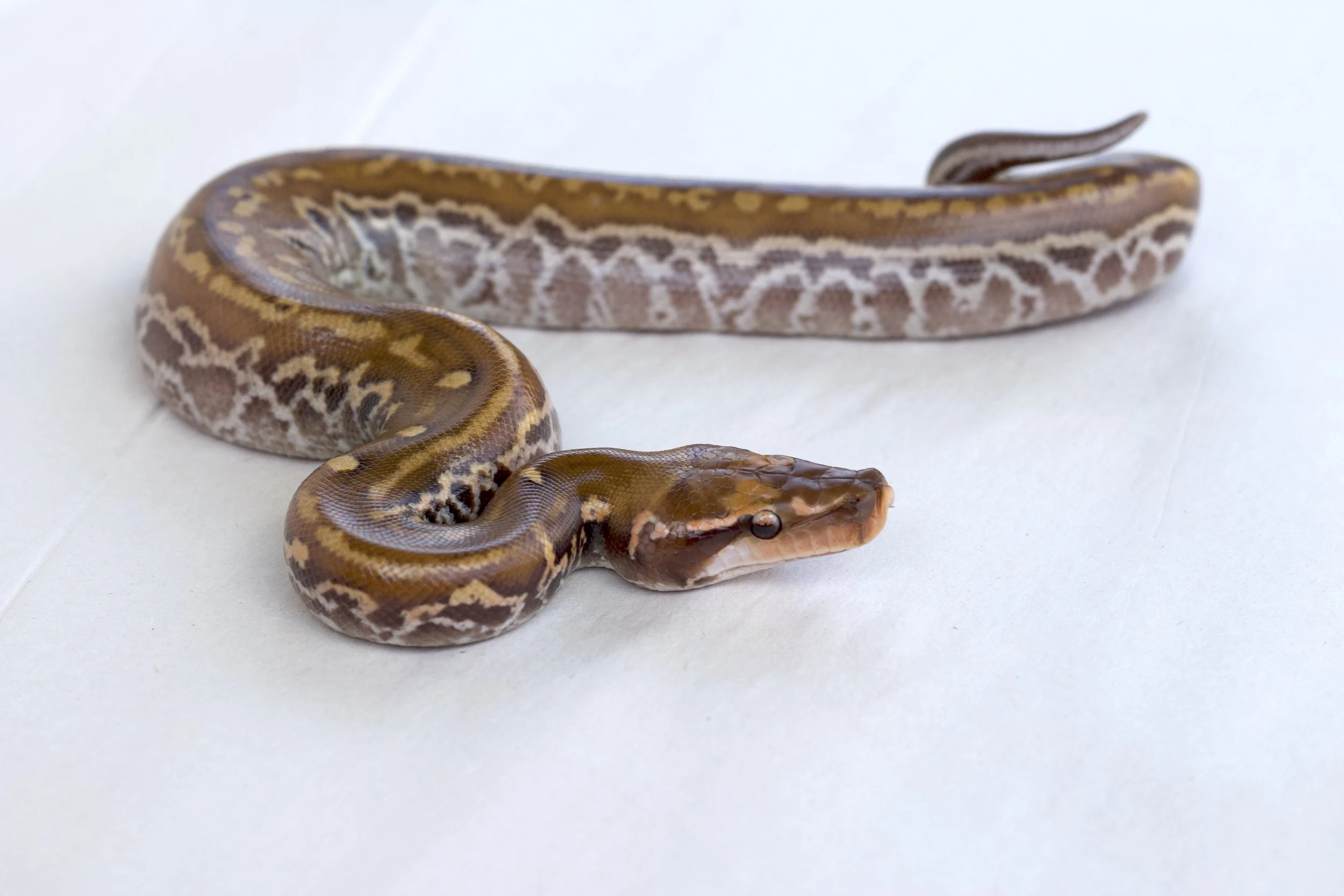
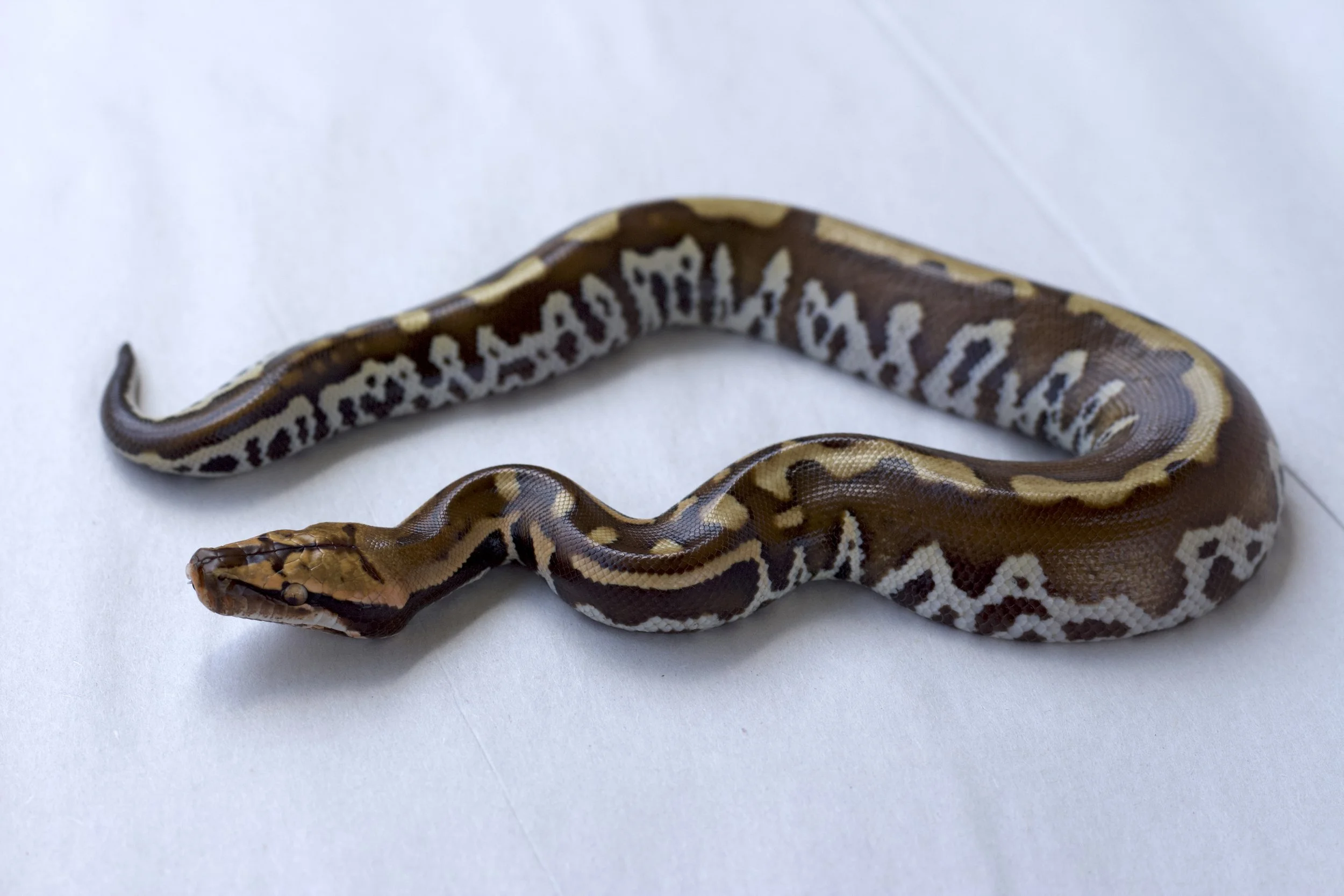
With these consistent and positive results, I felt confident that the AES issue had been resolved or at least was correctable. As long as we adhere to the incubation parameters and methods used in previous years, we should not observe any AES issues.At this point, the WI project had attracted attention, with people requesting project updates and availability dates. Despite the WI project feeling ready to be released, there was one last
question to be answered.
My intention was not to act as a gatekeeper for the project. In fact, the complete opposite.
When I crafted the breeding program, it was to study the AES and find possible causes
and, more importantly, actionable solutions so the blood python community could understand and learn more about these amazing animals. That's why I decided to hold off and not release any WIs at the
time. I wanted to provide those interested in the project with as many answers as

possible, backed by data, so that Blood Python enthusiasts can make an informed
decision about their participation in the project.
So why hold off after such promising results? Because one topic remained unclear. The Super Wrought-Iron. The Wrought-Iron is an incomplete dominant mutation, meaning that if we follow the
Mendelian genetic guidelines, the WI must have a homozygous condition of the WI gene,
or as we love to call them, a "Super". Tim Bailey of Bailey & Bailey reptiles produced a
clutch containing what we believe to be Super WIs in 2021. The Supers all presented
various degrees of anomalies, including facial and
eye issues, and
ultimately did not survive.With this precedent, I had one last question. Can we hatch a healthy Super Wrought-Iron
using what we've learned from our previous seasons? If so, then the data from that
attempt would give us a fuller picture, with key information important for those wanting to
incorporate this morph into their breeding programs. Having confidence from our previous
successful attempts breeding WI to other morphs, it was time to attempt the third and
final step of this multi-year effort: to hatch a healthy Super WI. To do so, I used a pair of WI het T+ albino, so the breeding could be almost identical to
the previous Super WI attempt, as all four snakes involved (Tim's pair and mine) were
related. If we obtain different results using similar genetics by adjusting the
environmental parameters during incubation, then we could "conclude" that the
environment to which the embryo is exposed during development is indeed the reason for
the appearance of anomalies AES affecting WIs.After successful mating activity, the female ovulated on December 18th and laid a seven-egg clutch on February 26th. 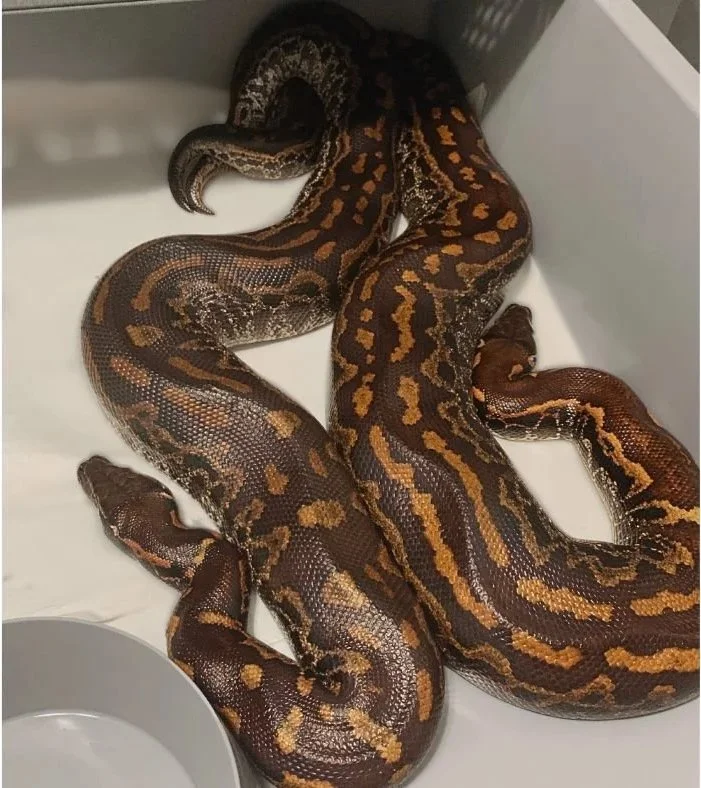
Adult WIs mating
The breeding process and
incubation methods were virtually identical to those used in previous years. Here
is a quick rundown.
Adult environment parameters during breeding season:
1) Room temperature at 78-80°F
2) Tub Hot spot of 82-84°F
3) Room relative humidity of 65-70%
4) The paired snakes were kept in an ARS rack system in an 80 series tub (7.25” H x 26.25” W x 33” D).Incubation parameters and equipment:
The incubator used was a 36-inch C-Serpent Incubator hooked to a VE-200 thermostat.
I used two Sterlite 15 qt clear plastic boxes with the following dimensions: 16 ½” x 13” x 6 5/8” and no air holes.
The egg boxes were placed on the mid-section rack of the incubator with the thermostat probe between the boxes
to keep the readings as accurate as possible.
A small “Accurite” Thermometer/hygrometer was placed inside the egg box to monitor both parameters closely.
The incubator temperature was set at 87°F. Throughout the incubation period, the temperatures fluctuated about 0.5 to 1 degree up or down, but never more than that.
The lowest temperature registered was 86.5°F, with a highest of 88°F towards the end of the incubation period.Until this point, everything was going according to plan. The hopes for a healthy Super WI were high.
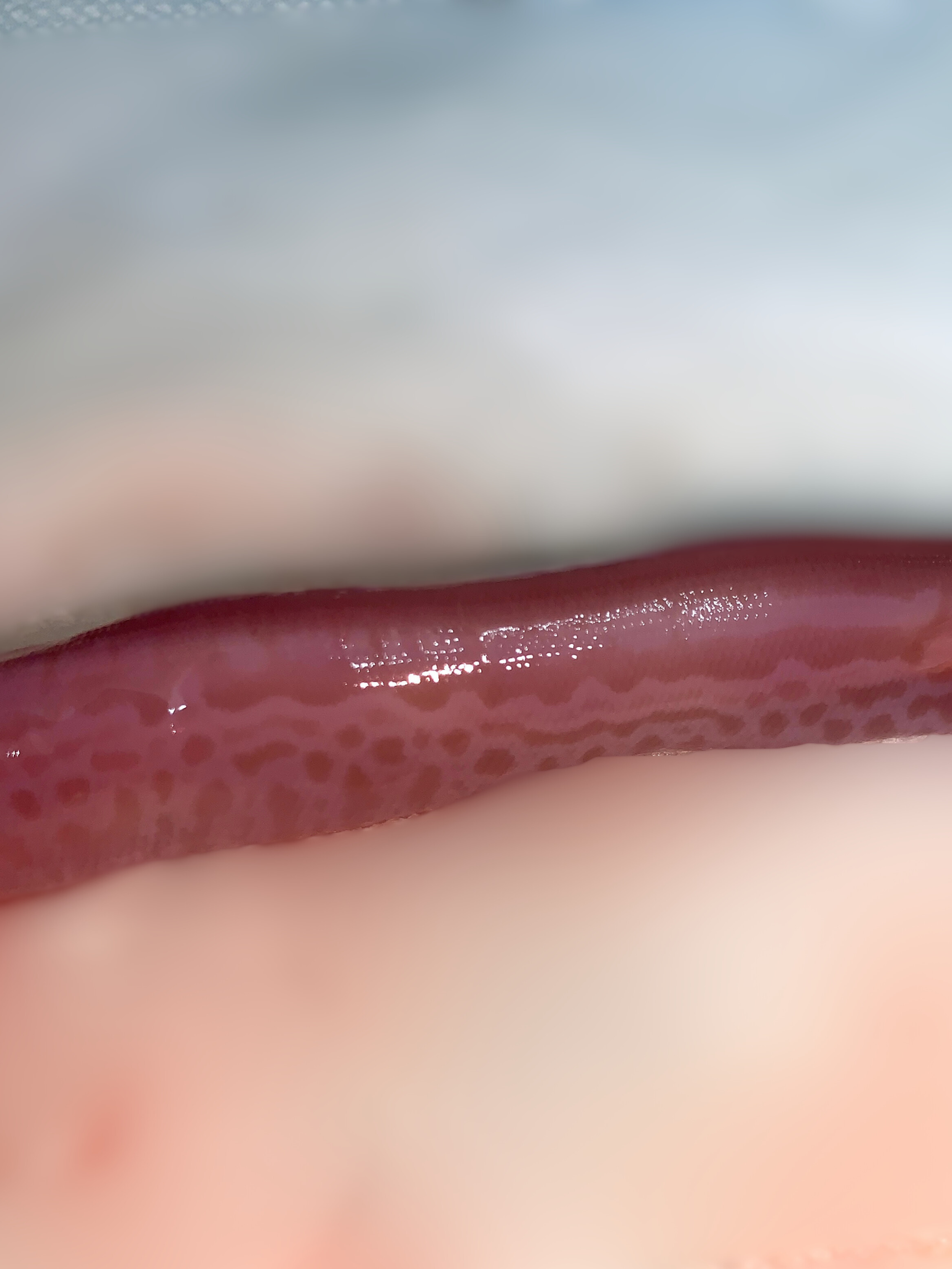
Unfortunately, it wasn't long before one egg went bad mid-term. When your sample size isn't big, every egg counts. That egg provided me the opportunity to assess the embryonic
development and investigate possible anomalies before the rest of the clutch hatched (see figure 1).The pattern was indeed from a Wrought-Iron, but it looked busier compared to a regular WI, with a broad dorsal pattern,
and the lateral marks looked more reduced in size and amount compared to normal WIs (see figure 2). The embryo did not show any signs of
obvious anomalies in the eyes or the body. Despite the early stage of development, the difference in the
pattern compared to other WIs made me think that this snake may have been a Super WI. Ten days later,
another egg died. The embryo looked underdeveloped and had similar characteristics to the other deceased WI
embryo. The remaining five good eggs made it to full term, and on May 1, 2025, the first baby emerged.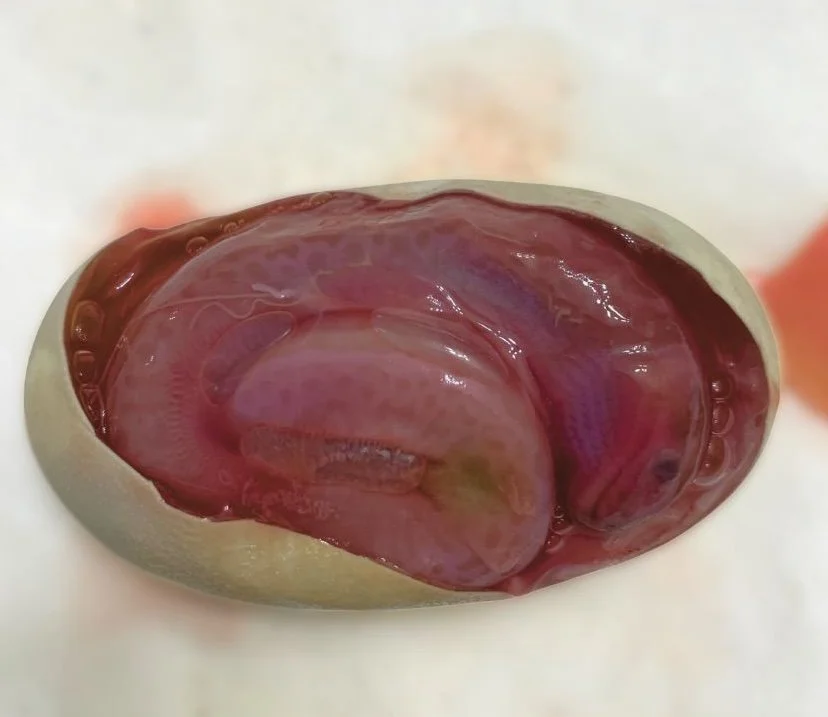
On day 63 of incubation, the first snake began to slit the shell; it was a WI. Upon
examination, the snout looked a little misshapen, and when the full head emerged, it was
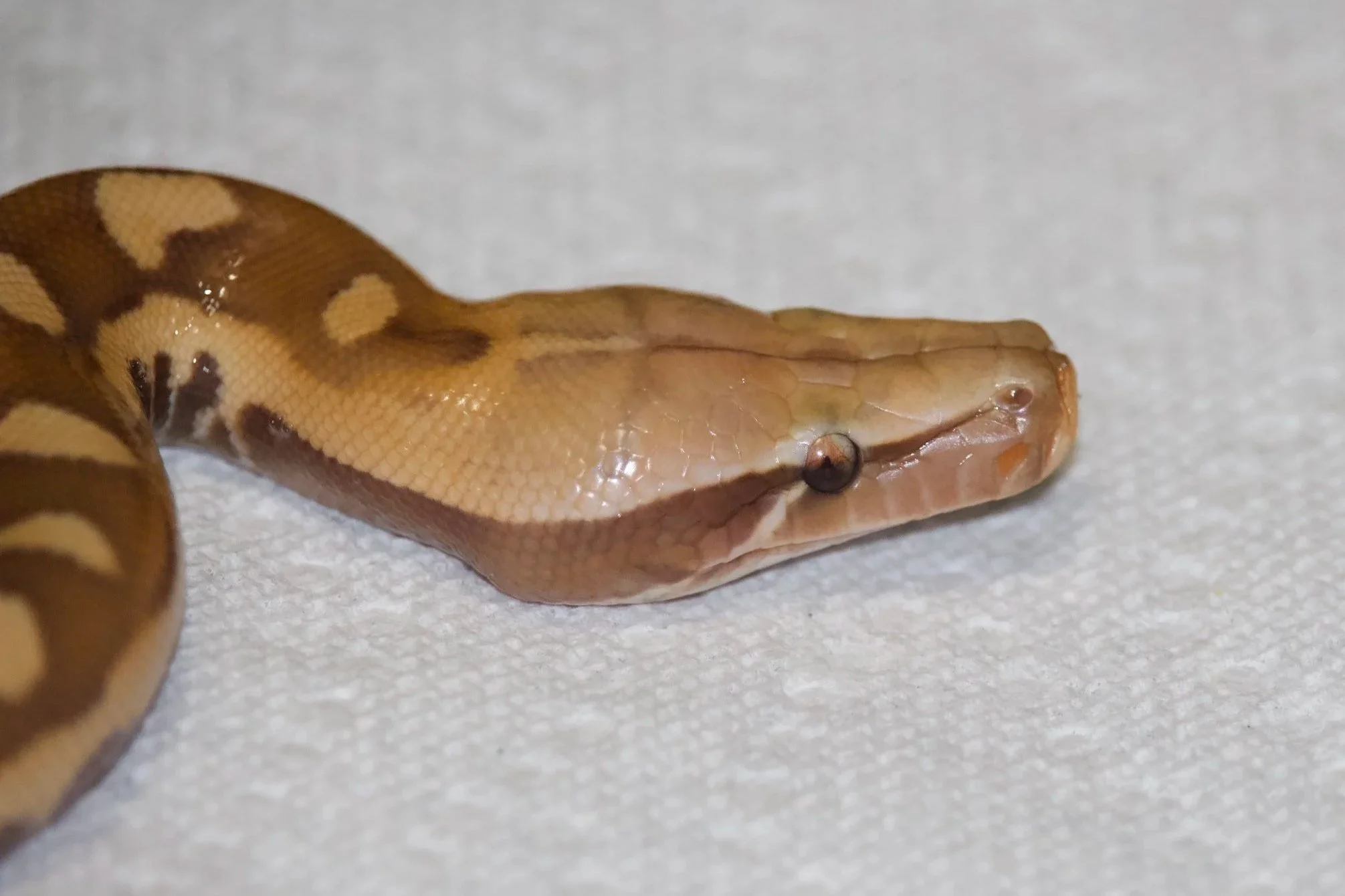
apparent that the left eye had a large white scale covering most of the spectacle (fig. 3), while the
right eye had about 40% coverage. The second baby emerged, and then a third and a
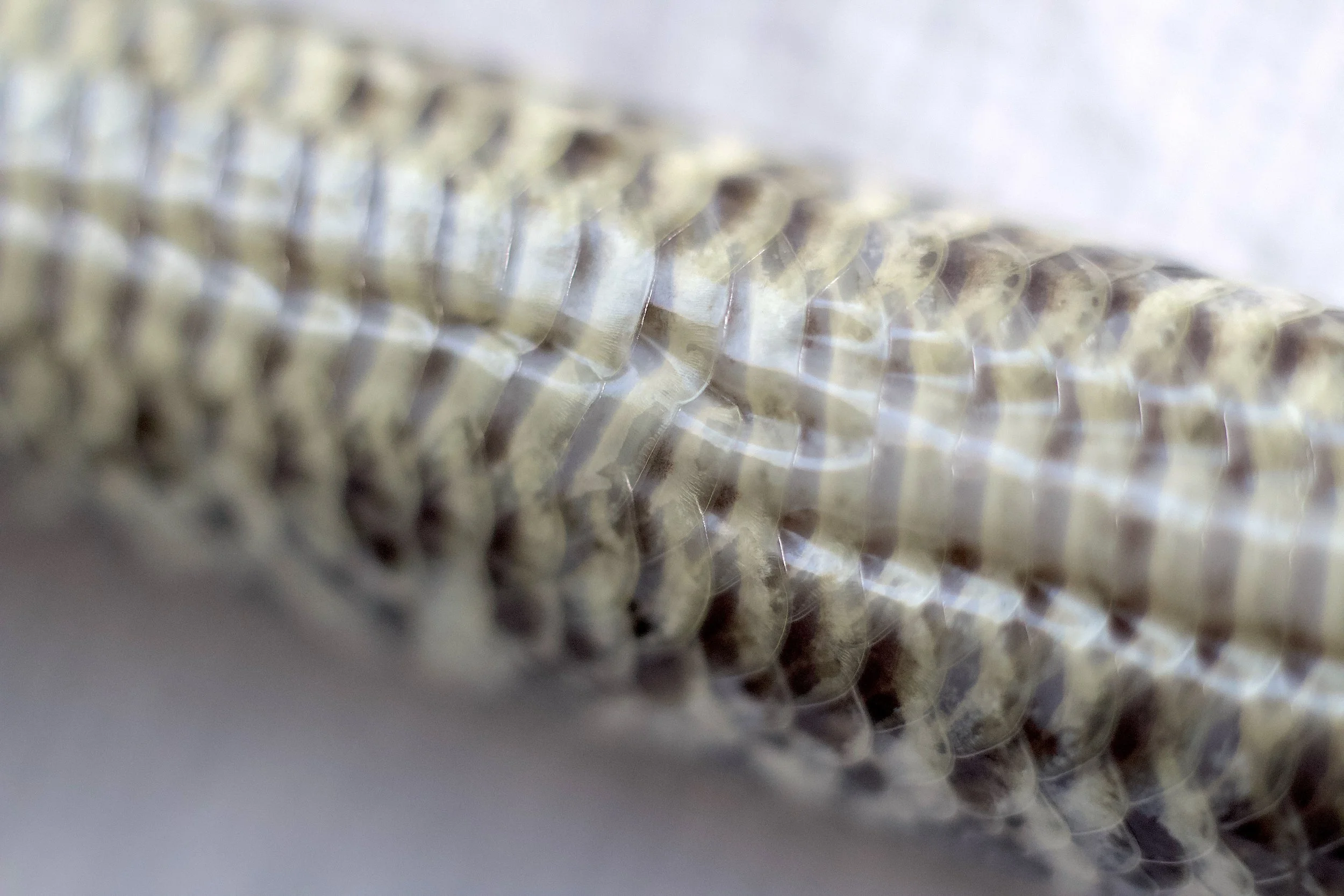
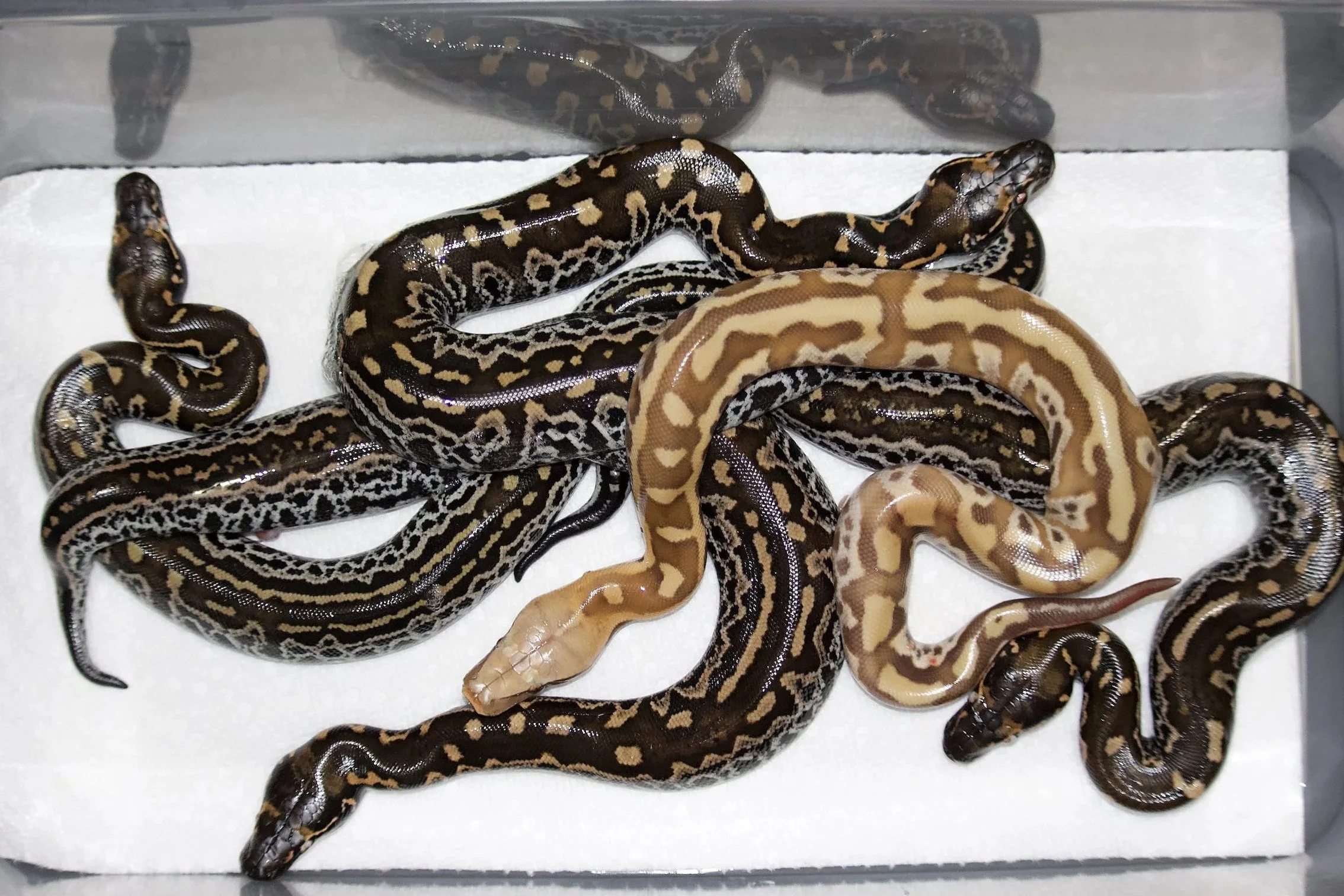
fourth, all 4 were Wrought Irons and all had various degrees of AES in both eyes. They also presented a combination of slight mandible misshapes and some divided ventral scales (fig. 4) affecting them in varying degrees. One baby had a bulgy eye (exophthalmos) with no AES affecting that eye. These babies looked like normal WIs, not "Supers" (fig. 5). Finally, the fifth baby emerged. It was a non-WI T+ albino, perfect in every way (fig. 6).
The final count:
1.3 Wrought-Irons.
0.1 T+Albino.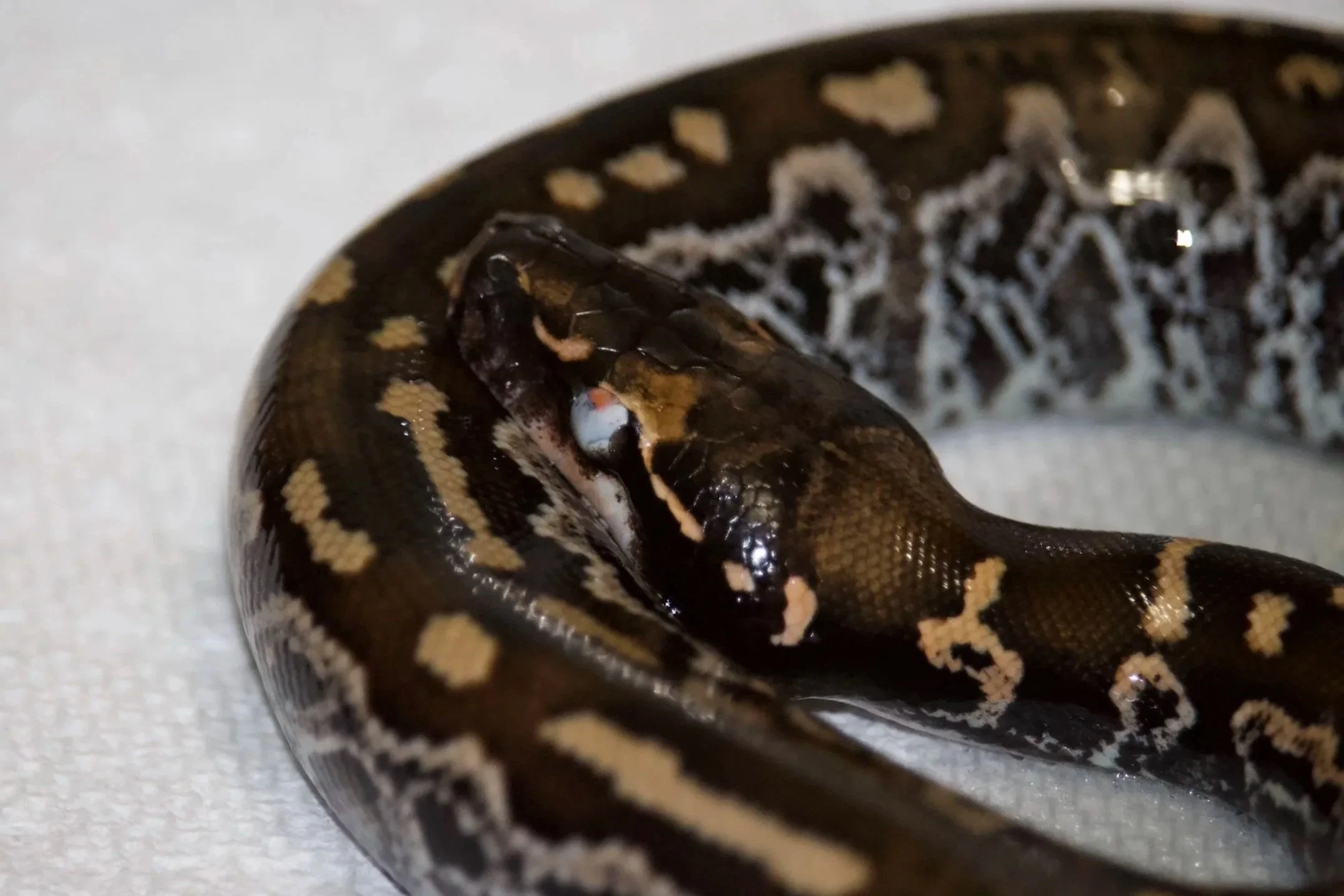
The takeaways:
1) The not-so-super "Super".
Incomplete dominant morphs of pythons and boas have been proven to be healthy, viable,
long-lived, and producers of a myriad of fantastic animals on their own or in combination
with other incomplete dominant and recessive morphs.
Results when breeding an incomplete dominant morph to the same incomplete dominant
morph to make the “super” dominant morph have been met with either great success,
mixed, limited, or no success in popular species, including Ball Pythons, Boa constrictors,
and Blood Pythons.
When compared to other species, "Supers" in Blood pythons have been particularly successful, with many great examples like: Golden Eyes, producing Magpies; Pollens, producing Flowers; Matrix, producing Ivories; Frostbite, producing Super Frostbites; and Druids, producing Super Druids. These proven “supers” have been established as healthy, long-lived, and able to reproduce successfully. Before the Super WI attempts, the only notable exception to this "good track record" in blood pythons was the Supers Batiks.The originators of the Pixel morph combo (Batik-Golden Eye), Alliey and Chris McAra of Giantkeeper Reptiles, reported that the breeding of Batik x Batik rarely produces the dominant “super” of the Batik. Though the incomplete dominant Batiks that hatched are healthy, the few “super” batiks that have hatched all had varying degrees of “kinked” tails below the cloaca. Despite these issues, the dominant "Super" Batiks can survive to adulthood. Although the sample size is limited, their observation is that the overall clutch viability is not an issue; however, if there is a Super Batik in the clutch, it often perishes before hatching. These results have led to
not breeding Batiks to each other.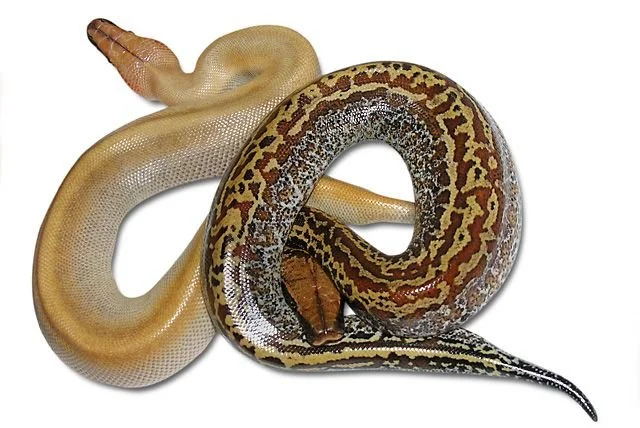
“Super” Batik (left)
and Batik (right)
Photo by Dave Barker (VPI)
In the WI context,  the breeding of Wrought-Iron x Wrought-Iron has not produced viable dominant
“supers” of the Wrought-Iron. Additionally, the incomplete dominant Wrought-Irons in
the WI x WI clutches to date have exhibited varying degrees of eye scale problems as well as facial

anomalies. These results have led to not breeding Wrought-Irons to each other.
The future will tell if there are conditions pre or during incubation, or combinations with
certain morphs added into the super combination, that will result in the production of
viable dominant “supers”.
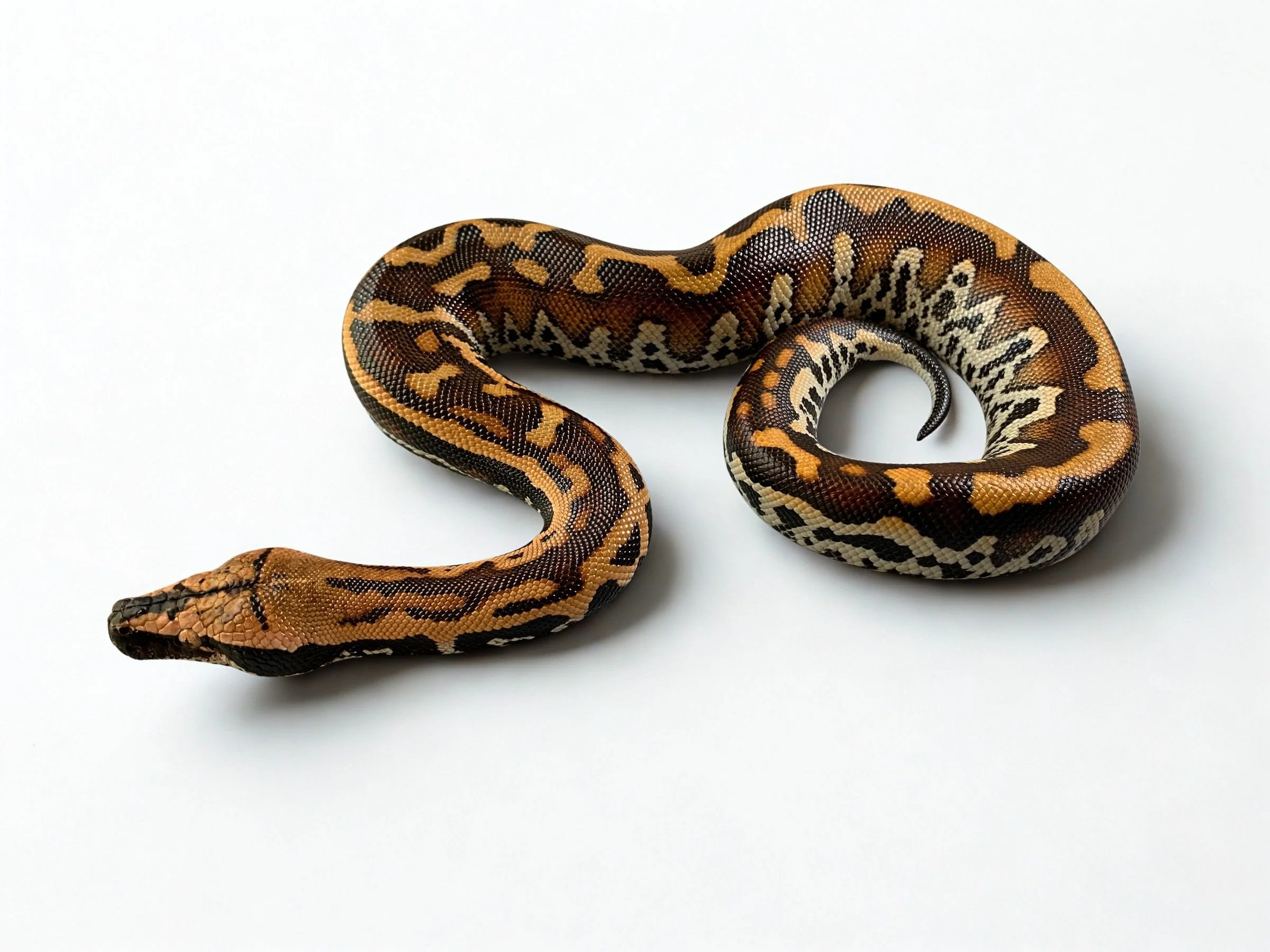
It is important to establish that incomplete dominant WIs are amazing snakes, with a bright future in the hobby, and Blood Pythons enthusiasts should not shy away from them, as they can produce stunning, healthy combos and be great additions to our projects (see images of some of our offspring below).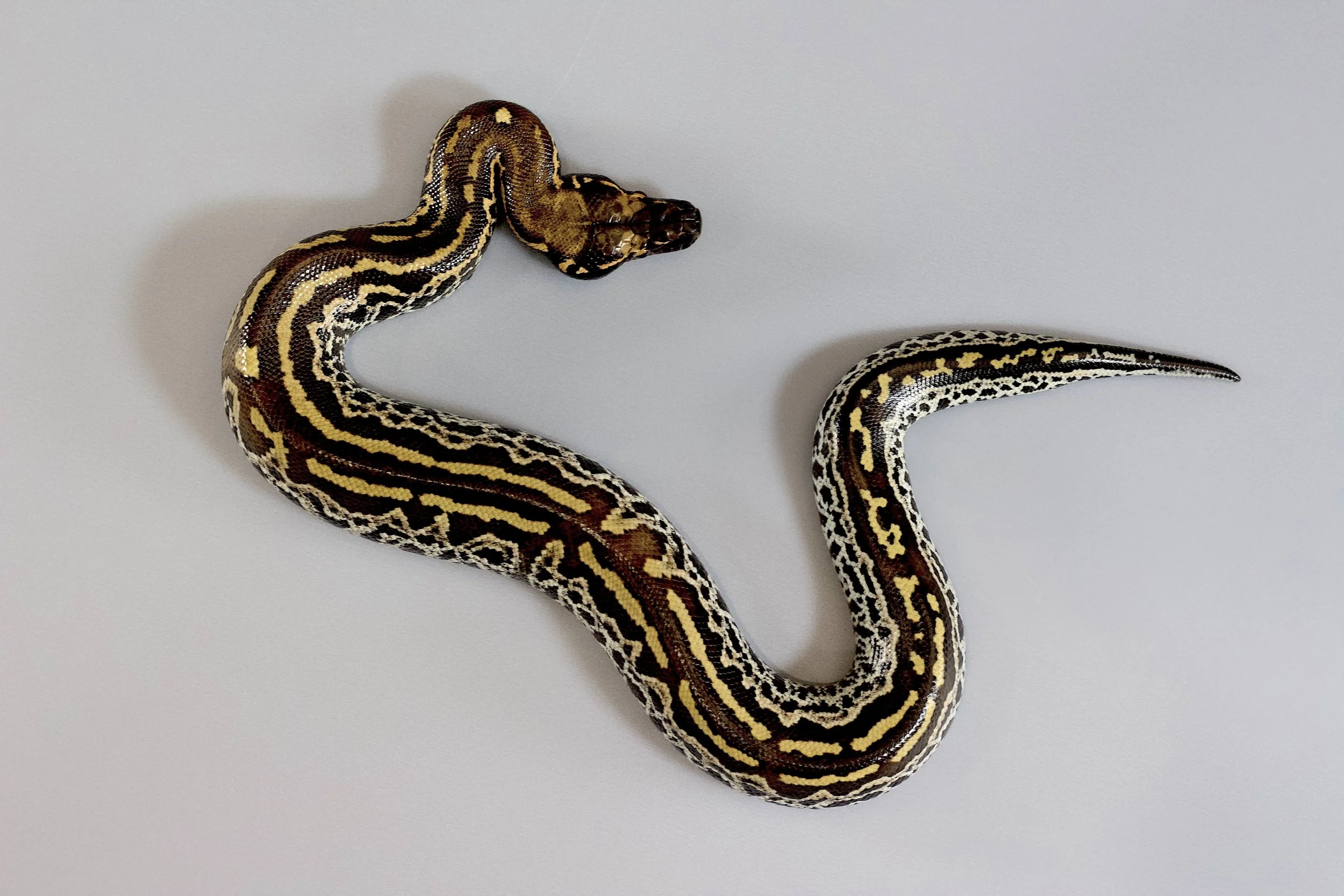
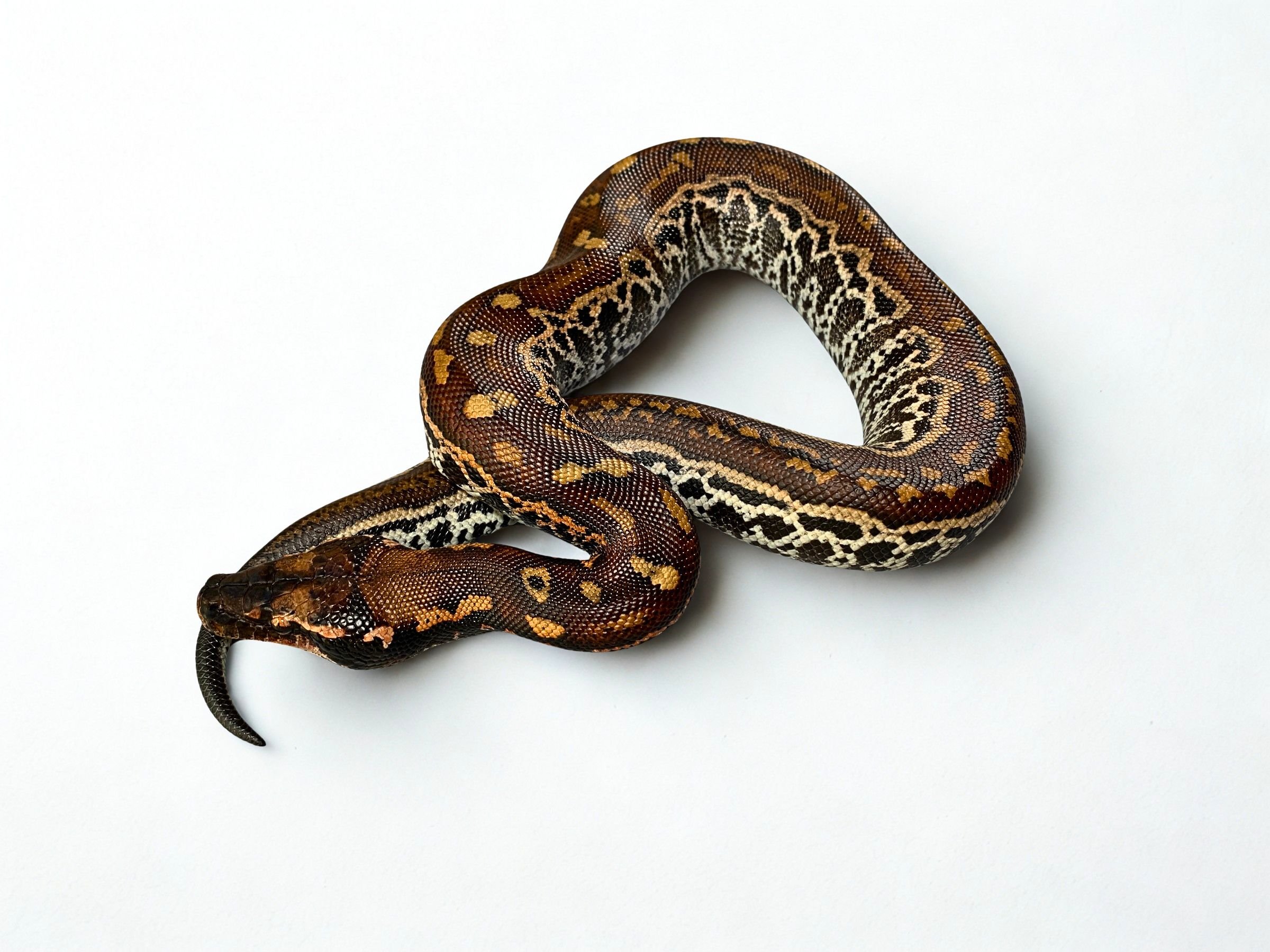
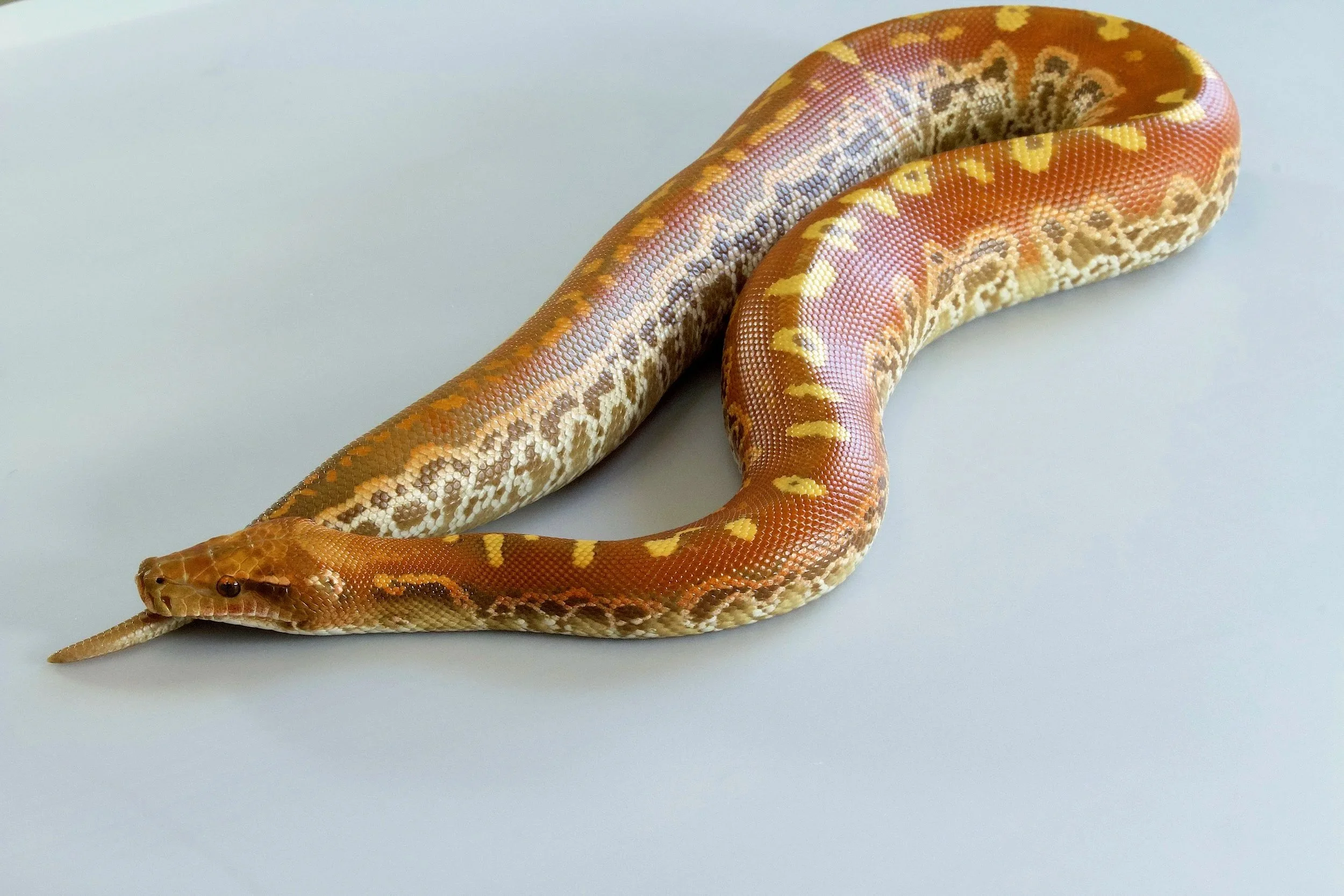
Before the WI to WI clutch, I never saw anomalies or AES in any of the WI clutches I hatched.Both of the WI parents used to produce this clutch had "perfect" eyes, and the same male WI was paired to non-WI females in previous seasons, resulting in perfect-eyed WI babies. It was only when I paired WI to WI together, despite replicating the same breeding and incubation conditions from previous years, that the anomalies and AES appeared.2) the Abnormal Eye Scale (AES).
An important consideration about the AES is that it is not exclusive to Super WI clutches. In fact, it was first described from
non-Super Wrought-Iron clutches. Based on the data from previous years, the proposition
was that the AES may be triggered by unfavorable environmental conditions during
embryonic development. When these conditions were modified, the occurrence of WIs
with AES was immediately reduced in non-Super WI attempts, with multiple "perfect-eyed" WI clutches.
Despite our advances in the project, to date, the complete understanding of this issue remains unknown, and more research is being conducted to gather more data to broaden our understanding of this topic. For those of you wanting to dive deeper into the AES subject, I've created one additional article called "Ay, Ay, Eye... The anatomy of an issue," which is focused on providing a thorough, objective description of the
physical characteristics and findings of the AES. I hope you found this write-up interesting and useful. As always, keep pushing forward.
—Ernesto Hinojosa.
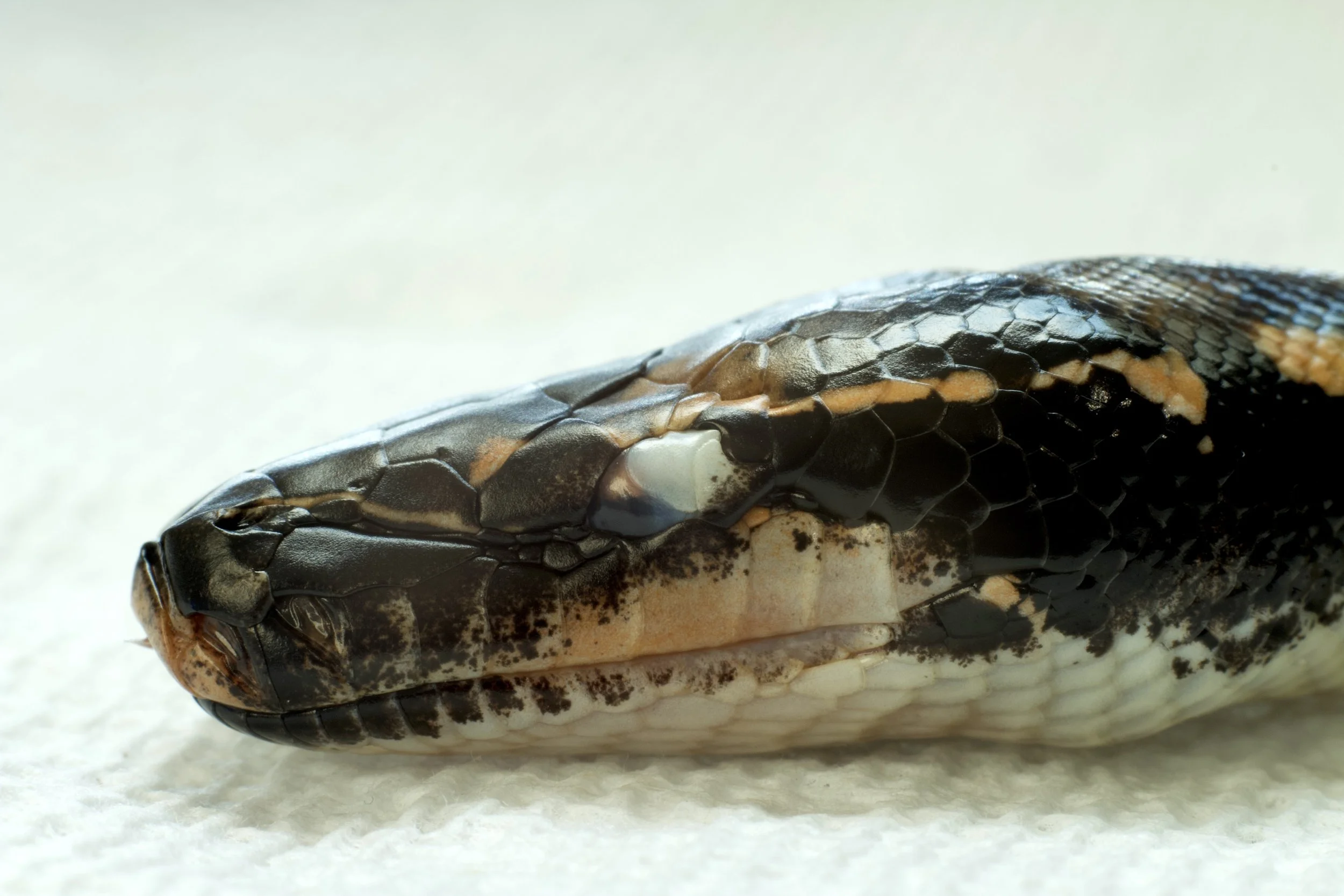
Abnormal eye scale observed on a non-super Wrought-Iron neonate from the Super WI clutch.
